Descendants of Hungarian Jewish families may be eligible for Hungarian citizenship, but being descended from someone born in Hungary is not always enough to determine the correct procedure. Border changes, migration, naturalization, name changes and Holocaust-era disruption can all affect the citizenship analysis. Careful genealogical research is often the first step in determining whether citizenship can be verified or whether simplified naturalization is the appropriate route.
Hungarian Citizenship for Descendants of Hungarian Jewish Families
For many descendants of Hungarian Jewish families, the search for Hungarian citizenship begins with what sounds like a simple question:
Was my parent, grandparent or great-grandparent Hungarian?
The answer, however, is not always simple.
Hungarian Jewish families were profoundly affected by the events of the twentieth century. Borders changed. Families migrated. Names changed. People were deported, displaced or murdered during the Holocaust. Survivors rebuilt their lives in Israel, the United States, Canada, Australia and elsewhere. Documents were lost, destroyed or scattered between countries and archives.
As a result, establishing Hungarian citizenship through Jewish ancestry can require much more than finding an old Hungarian birth certificate.
It often requires reconstructing the family history carefully and understanding what that history means in the context of Hungarian citizenship.
Being born in Hungary is only the beginning
One of the most common assumptions I encounter is that if a grandparent or great-grandparent was born in Hungary, their descendants automatically qualify for Hungarian citizenship.
Sometimes the case is indeed relatively straightforward. In others, the ancestor's citizenship position may have been affected by when and where they lived, when they left Hungary, whether they acquired another nationality and which Hungarian citizenship rules applied at that particular point in history.
There is another complication: the Hungary in which your ancestor was born may not correspond to the borders of Hungary today.
A place recorded as Hungary on an old birth or marriage record may now be located in Slovakia, Romania, Ukraine, Serbia, Croatia or another neighboring country.
That does not necessarily prevent a citizenship case. But the historical circumstances must be understood correctly.
This is why genealogy and citizenship analysis cannot be separated.
Citizenship verification or simplified naturalization?
For descendants of Hungarian families, there are two fundamentally different situations that I encounter frequently.
In some families, Hungarian citizenship may have continued from one generation to the next. In such a case, the applicant may already be a Hungarian citizen and need to have that citizenship verified and officially documented.
In other cases, the citizenship chain was interrupted or the applicant is relying on Hungarian ancestry rather than continuous citizenship. Simplified naturalization may then be the appropriate route. This procedure has different requirements, including knowledge of Hungarian.
Determining which route applies should therefore come before preparing the application.
Two people whose grandparents were born in the same Hungarian town can have completely different citizenship situations because their families left Hungary at different times and experienced different legal and historical circumstances.
Why Hungarian Jewish cases can be particularly complex
Hungarian Jewish genealogy presents its own documentary challenges.
The same person may appear under several versions of a name. A Hungarian given name may later appear in German, Hebrew, Yiddish, English or another language. A surname may have been Magyarized, translated, shortened or changed following emigration.
Dates and birthplaces can also differ between documents.
A woman recorded as Erzsébet in Hungary may later appear as Elizabeth. A surname used for generations in Hungary may be altered after immigration. A town may appear under its Hungarian name in one document and its Slovak, Romanian, Ukrainian or German name in another.
These differences do not necessarily mean that the records belong to different people.
But the documentary chain must establish convincingly that they concern the same family.
The Holocaust disrupted both families and documentation
For many Jewish families, the documentary difficulties cannot be separated from the Holocaust.
A person may disappear from ordinary civil records because they were deported. Family members may have been murdered while others survived and emigrated. Marriages, births and name changes may have occurred in different countries within a relatively short period.
Records concerning one family may consequently be found in Hungarian archives, Jewish community registers, Holocaust collections, immigration files, Israeli civil-registration records and archives throughout Central Europe.
Sometimes the record everyone expects to find simply no longer exists.
That does not necessarily mean that the citizenship case ends there.
The question becomes whether the missing fact can be established through other reliable evidence.
Marriage records, siblings' birth records, parents' marriages, school registers, residence records, immigration files, naturalization documents and other archival sources can sometimes reconstruct the missing part of the story.
Israel is often an important part of the documentary trail
For many Hungarian Jewish families, migration did not run directly from Hungary to the United States, Canada or Australia.
Israel was often an important chapter in the family history.
A survivor may have immigrated to Israel after the war, married there, had children there, changed a name or obtained Israeli civil-status documents before the family later moved elsewhere.
Those records can become extremely important decades later when a child or grandchild wants to establish Hungarian citizenship.
Because I work with both Hungarian and Israeli archives, civil-registration systems and administrative records, I frequently handle cases where the documentary chain must be reconstructed across both countries.
An Israeli marriage certificate may explain a surname change. A birth record may connect one generation to another. An Israeli administrative record may help establish that two apparently different names actually belong to the same person.
For a descendant living today in the United States or elsewhere, the relevant documentary chain may therefore extend across Hungary, Israel and a third country.
Historical borders matter
Your ancestor may have told the family that they were Hungarian even though the town where they were born is no longer located in Hungary.
Both things can be true.
Places such as Kassa, Kolozsvár, Nagyvárad, Munkács and Szatmár belonged to historical Hungary during relevant periods but today are known as Košice, Cluj-Napoca, Oradea, Mukachevo and Satu Mare.
The modern location of the town does not by itself answer the citizenship question.
What matters is where the person lived, when they lived there, which territorial and citizenship rules applied at the relevant time and what happened afterward.
Precise chronology is therefore essential.
A family memory that “my grandfather came from Hungary” is a valuable starting point. Genealogical and historical research turns that memory into a documented timeline.
Naturalization in another country can matter
What happened after the Hungarian ancestor left is often just as important as what happened before.
Hungarian Jews who emigrated may later have become citizens of Israel, the United States or other countries.
The dates and legal consequences of these events can be relevant when reconstructing a Hungarian citizenship chain.
This is why I do not look only for Hungarian birth and marriage certificates. Immigration files, foreign naturalization records and other evidence can be equally important.
Rather than asking only:
Was my great-grandfather Hungarian?
we may also need to establish:
When did he leave? Where did he live afterward? When did he acquire another citizenship? And had the next generation already been born when that happened?
In citizenship research, chronology matters.
Genealogy for citizenship is not simply building a family tree
Citizenship genealogy is different from creating a family tree for personal interest.
The objective is not to collect the largest possible number of ancestors.
The purpose is to establish a clear documentary chain from the relevant Hungarian ancestor to the present-day applicant and to understand the citizenship significance of the events within that chain.
Depending on the family, that may require documenting births, marriages, divorces, name changes, residence, migration, naturalization and discrepancies between records.
Each document needs to make sense in relation to the others.
A family tree alone cannot establish a citizenship case if the underlying evidence does not support it.
What if the Hungarian birth record cannot be found?
This is something I encounter regularly.
A missing birth record does not necessarily mean that the family story is incorrect.
The ancestor may have been born in a nearby village rather than the town remembered by the family. The relevant register may now be held in another country. A Jewish register may have been destroyed or lost. The person's name may have been entered differently than expected.
In difficult cases, I look for the documentary footprint surrounding the missing event.
Marriage records, siblings' births, parents' marriage records, school registers, residence documentation, immigration records and other archival materials can sometimes establish what happened when the obvious document cannot be located.
These are often the cases where professional genealogy becomes most valuable.
Languages matter
Hungarian Jewish genealogy is inherently multilingual.
The same family may appear in Hungarian, German, Hebrew, Yiddish, Slovak, Romanian, English or other records within only a few generations.
I speak several languages, including Hungarian, English, Hebrew and German. Being able to work directly with records in different languages helps me recognize names, terminology and historical context that can sometimes be obscured in translation.
It also helps when communicating directly with archives and authorities in the countries through which a family's history passed.
For me, genealogy is one of the fields where my love of languages, history and research come together naturally.
For many Jewish families, citizenship is also about reconnection
There are practical advantages to Hungarian citizenship. Hungary is a member of the European Union, and citizenship can create opportunities for children and future generations.
But among Jewish families, I often encounter another motivation as well.
Their Hungarian connection was not necessarily voluntarily abandoned.
It was frequently interrupted by history.
A family fled persecution. A grandparent survived Auschwitz. Survivors rebuilt their lives in Israel. Hungarian disappeared as a family language. Children and grandchildren grew up thousands of kilometers from the towns in which their families had lived for generations.
For some descendants, establishing Hungarian citizenship becomes one way of restoring a connection that history interrupted.
I understand that personally.
My own interest in genealogy began when I was ten years old and my father told me about my great-grandfather, a Hungarian lawyer who spoke seven languages and was murdered in Auschwitz.
Questions about the life of someone I had never known ultimately led me to professional genealogy and, many years later, to helping other families reconstruct their own Hungarian histories.
A personally managed process
My practice is deliberately different from a high-volume citizenship service.
I work with a trusted team of researchers, case managers and Hungarian-language professionals, but I remain personally involved in the strategy and professional direction of every case we accept.
We can coordinate genealogical research, obtain and review civil and archival records, arrange translations, prepare the application, liaise with archives, consulates and Hungarian authorities, develop the submission strategy and, where necessary, coordinate Hungarian-language preparation.
My service is designed primarily for clients who want their case professionally managed from beginning to end, rather than those looking for instructions for a self-managed application.
This level of involvement can be particularly valuable when the family history crosses several countries, records are missing, names have changed or the historical citizenship position is unclear.
Clients work with a team, but they never disappear into a system.
Where should you begin?
If you have Hungarian Jewish ancestry and are considering Hungarian citizenship, the first step is usually to establish what happened in your family before deciding which citizenship procedure applies.
You do not necessarily need to have every document before asking for an assessment.
Useful starting information includes the names of your Hungarian ancestors, approximate dates and places of birth, when they left Hungary, where they subsequently lived and any birth, marriage, immigration or naturalization records already available in the family.
From there, the documentary chain can be examined and the appropriate citizenship route identified.
For some families, the answer is straightforward.
For others, the real work begins with a handful of old documents, several spellings of the same surname, a town that changed countries more than once — and a family story waiting to be reconstructed.
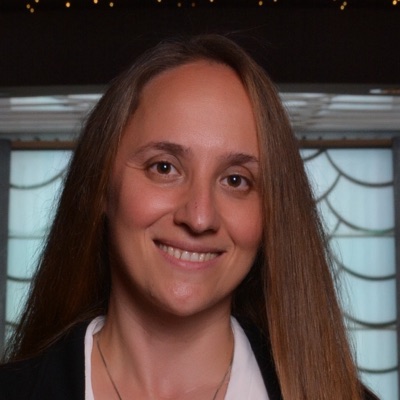 Anett Neumann, MScHungarian Citizenship Consultant & Professional Genealogist · formerly Anett Goldstein ·