Can you obtain Hungarian citizenship by declaration without speaking Hungarian? Yes, if you meet one of the specific legal conditions. These include being born before October 1, 1957, to a Hungarian citizen mother and foreign father without acquiring Hungarian citizenship at birth, or having personally lost citizenship under certain historical laws. The declaration is not available to everyone with Hungarian ancestry, and descendants must establish their eligibility separately.
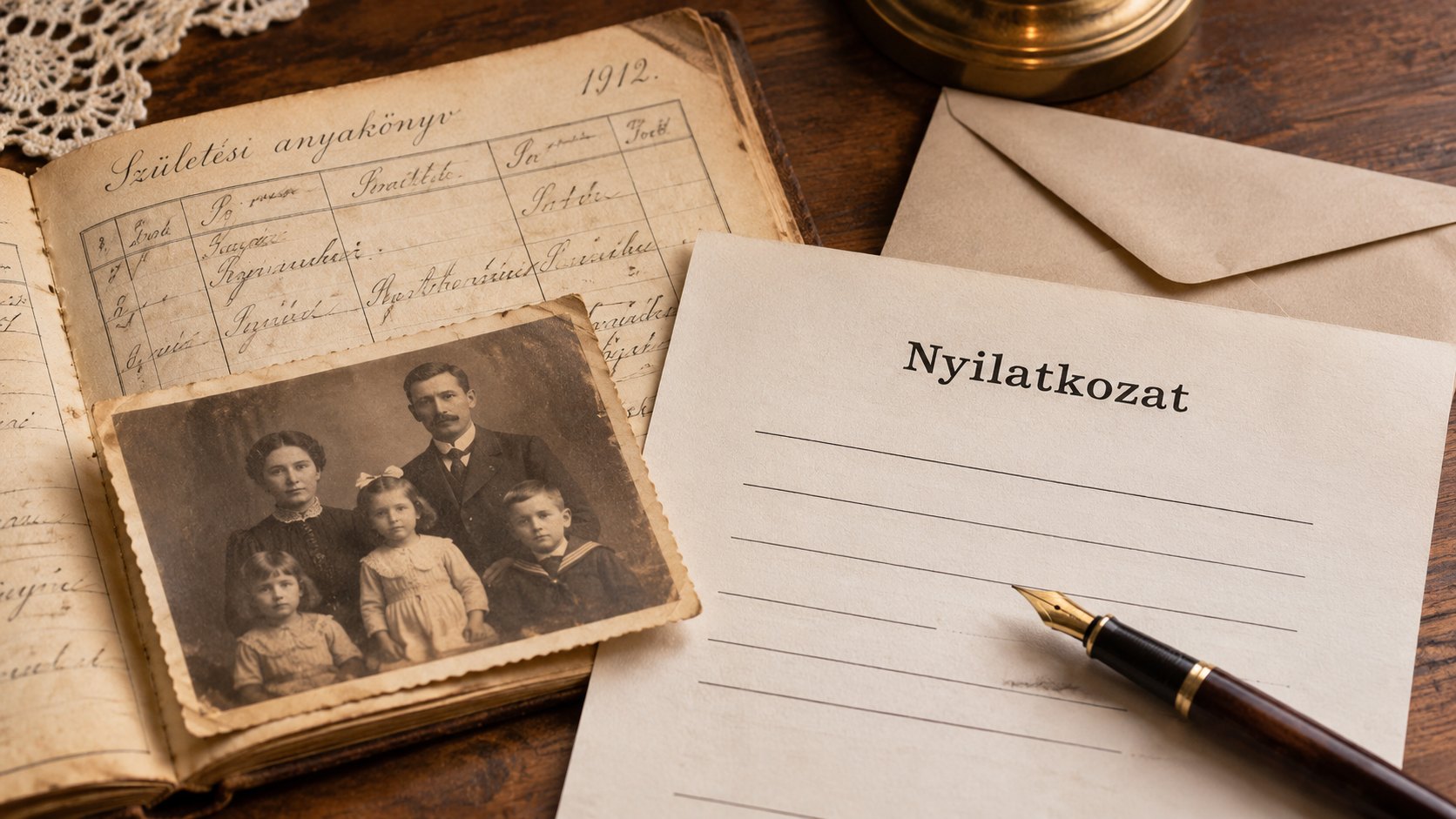
Can you obtain Hungarian citizenship without speaking Hungarian, even if you are not already a Hungarian citizen?
In certain circumstances, yes.
Hungarian citizenship law provides a special procedure known as állampolgárság megszerzése nyilatkozattal, or acquisition of Hungarian citizenship by declaration.
Unlike simplified naturalization, this procedure does not require Hungarian-language proficiency.
However, it is available only to individuals who meet specific statutory conditions.
These include people born before October 1, 1957, to Hungarian mothers and foreign fathers who did not acquire Hungarian citizenship at birth, individuals affected by certain historical citizenship deprivations or losses, and particular categories of stateless persons.
For families whose history involves emigration, political persecution, wartime displacement, or historical discrimination against women, understanding the declaration procedure can be important.
What Is Hungarian Citizenship by Declaration?
Hungarian citizenship by declaration is a special legal procedure established under Section 5/A of Act LV of 1993 on Hungarian Citizenship.
It permits certain individuals to acquire or reacquire Hungarian citizenship through a formal written declaration addressed to the President of Hungary.
The legal grounds are specifically defined by legislation.
Unlike citizenship verification, declaration does not simply confirm citizenship that the applicant already possesses.
Instead, the applicant acquires Hungarian citizenship through the declaration procedure.
The law provides that citizenship is acquired from the date of the declaration when the statutory requirements are satisfied.
This distinction becomes particularly important when examining whether the applicant's children or grandchildren also inherited Hungarian citizenship.
1. Born Before October 1, 1957, to a Hungarian Mother
One of the most important categories concerns people born before October 1, 1957, to a Hungarian citizen mother and a foreign citizen father who did not acquire Hungarian citizenship at birth.
Historically, Hungarian citizenship legislation did not treat mothers and fathers equally.
Before October 1, 1957, a child born within marriage generally acquired Hungarian citizenship through a Hungarian father, not through a Hungarian mother married to a foreign citizen.
The position of children born outside marriage was different and must be examined under the historical rules concerning parentage.
Consequently, a woman could retain Hungarian citizenship while being unable to transmit it to her child born within marriage.
The 1957 citizenship reform introduced equal transmission of citizenship through either parent. But it did not automatically grant citizenship retroactively to everyone born before the reform.
Section 5/A(1)(c) of the current citizenship legislation provides a remedy for qualifying individuals.
An Example: A Hungarian Mother and Her American-Born Daughter
Imagine a woman born in Budapest in 1925.
She emigrates to the United States after the Second World War and marries an American citizen in 1950.
She does not automatically acquire American nationality through marriage and retains her Hungarian citizenship.
Their daughter is born in New York in 1953.
Although her mother is Hungarian, the daughter does not acquire Hungarian citizenship at birth under the legislation then applicable to children born within marriage.
Today, the daughter may qualify to acquire Hungarian citizenship by declaration.
She does not need to demonstrate Hungarian-language proficiency.
However, the application must establish that her mother was a Hungarian citizen when she was born and that she did not acquire Hungarian citizenship under the historical legislation.
This may require both genealogical documentation and historical citizenship analysis.
Do the Children of Someone Who Acquires Citizenship by Declaration Also Become Hungarian?
Not automatically.
This is one of the most important legal distinctions in declaration cases.
Consider the daughter in the previous example.
She was born in 1953 but did not acquire Hungarian citizenship at birth.
She subsequently had a son in 1980.
If she acquires Hungarian citizenship through declaration in 2026, she was not a Hungarian citizen when her son was born in 1980.
Her later acquisition of citizenship does not retroactively establish Hungarian citizenship for her son.
Consequently, her adult son cannot ordinarily obtain Hungarian citizenship verification through this maternal line.
Instead, he may qualify for simplified naturalization based on his Hungarian ancestry, provided the statutory conditions are met, including Hungarian-language proficiency.
The mother may therefore acquire Hungarian citizenship through declaration without speaking Hungarian, while her adult son must generally pursue a different procedure.
This illustrates an important principle: acquiring Hungarian citizenship today does not necessarily establish that citizenship existed in earlier generations.
2. People Who Were Deprived of Hungarian Citizenship Under Historical Legislation
Another category concerns individuals deprived of Hungarian citizenship under specified laws enacted between 1947 and 1957.
During the postwar period and subsequent political era, Hungarian legislation permitted the deprivation of citizenship in certain circumstances.
Some individuals lost their citizenship through measures connected with political persecution or their circumstances abroad.
Section 5/A(1)(a) identifies the relevant legislative provisions under which such citizenship losses may qualify for reacquisition by declaration.
For an applicant today, the central question is whether their own Hungarian citizenship was terminated under one of those specified provisions.
The mere fact that an ancestor was politically persecuted or emigrated during this period does not establish eligibility.
The original citizenship loss and its legal basis must be identified.
In some cases, historical administrative records, citizenship files, or government decisions may establish the relevant circumstances.
3. People Released From Hungarian Citizenship Between 1947 and 1990
Hungarian citizenship law also provides a declaration route for individuals whose Hungarian citizenship ceased through formal release, known as elbocsátás, during a specific historical period.
The relevant dates are:
September 15, 1947, to May 2, 1990.
During this period, some Hungarian citizens living abroad sought and obtained formal release from their Hungarian citizenship.
This was a legal procedure distinct from simply acquiring another nationality.
Under Section 5/A(1)(a), individuals whose citizenship ceased through qualifying release during this period may reacquire Hungarian citizenship by declaration.
For example, imagine a Hungarian citizen who emigrated to another country and formally obtained release from Hungarian citizenship in 1970.
If the historical documents establish that the loss occurred through the statutory release procedure, the individual may qualify to reacquire citizenship by declaration.
The applicant's Hungarian citizenship history must be examined separately.
4. Ethnic Germans Who Lost Hungarian Citizenship Through Postwar Resettlement
Another important category concerns people affected by the postwar expulsion and resettlement of ethnic Germans from Hungary.
Following the Second World War, many individuals of German nationality were required to leave Hungary under government measures regulating their resettlement.
Certain individuals who were obliged to resettle, as well as people affected by the specified historical regulations, lost their Hungarian citizenship.
Hungarian citizenship legislation now provides a declaration route for people whose citizenship ended under the relevant provisions.
There is a distinction between people who personally lost citizenship through compulsory resettlement and their descendants born afterward.
That distinction remains essential.
An individual who personally lost Hungarian citizenship under the relevant resettlement legislation may qualify to reacquire it by declaration.
A child born abroad after the parent's loss of Hungarian citizenship was not necessarily a Hungarian citizen at birth and cannot automatically use the same declaration provision.
Such a descendant may instead qualify for simplified naturalization if the statutory requirements are satisfied.
The historical evidence must establish the legal basis of the original citizenship loss.
5. Certain Stateless Persons Born in Hungary
Hungarian citizenship law also provides declaration procedures intended to address particular cases of statelessness.
These provisions are more narrowly defined than the historical categories discussed above.
One category concerns people born in Hungary who did not acquire their foreign parents' citizenship at birth under the applicable foreign nationality laws.
The legislation requires, among other conditions, that the parents had a Hungarian residence at the time of birth and that the applicant has lived in Hungary for at least five years immediately before making the declaration.
A separate provision concerns certain people born in Hungary who subsequently became stateless.
The statutory conditions differ between the categories.
For both of these categories, the declaration must be made before the applicant reaches the age of nineteen.
These provisions are primarily relevant to specific situations involving birth, residence, and statelessness in Hungary rather than ordinary citizenship-by-descent cases involving families established abroad.
Does Hungarian Citizenship by Declaration Require Speaking Hungarian?
No Hungarian-language proficiency requirement applies to acquisition or reacquisition by declaration under Section 5/A.
This is an important difference from simplified naturalization and ordinary re-naturalization.
However, applicants must still establish that they qualify under one of the statutory categories.
A declaration cannot be used simply because the applicant has Hungarian ancestry but does not speak Hungarian.
The right to use this procedure depends on a specific legal circumstance, such as qualifying maternal ancestry before 1957 or a recognized historical loss of citizenship.
The underlying evidence is therefore essential.
Can You Use Declaration if Your Ancestor Lost Hungarian Citizenship Through Emigration?
Not necessarily.
Under the historical citizenship law of 1879, prolonged absence abroad could result in the loss of Hungarian citizenship under certain conditions.
However, loss of citizenship through the historical ten-year absence rule does not, by itself, qualify an individual for acquisition or reacquisition by declaration under Section 5/A.
The statutory declaration categories are limited.
A person who personally lost Hungarian citizenship under another historical rule may need to consider re-naturalization.
A descendant who was never personally a Hungarian citizen may qualify for simplified naturalization based on ancestry.
The appropriate route depends on whether the individual previously held Hungarian citizenship and how it was lost.
Read more: Did Your Hungarian Ancestor Lose Citizenship After Emigrating?
Declaration, Citizenship Verification, and Naturalization: What Is the Difference?
These procedures address different legal circumstances.
| Procedure | Who is it for? | Hungarian required? |
|---|---|---|
| Citizenship verification | People who are already Hungarian citizens | No |
| Citizenship by declaration | People meeting specific statutory categories | No |
| Simplified naturalization | Eligible applicants with Hungarian ancestry or qualifying origin | Generally yes |
| Re-naturalization | People who personally held and later lost Hungarian citizenship | Generally yes |
Citizenship verification confirms an existing status.
Declaration permits acquisition or reacquisition under narrowly defined statutory provisions.
Simplified naturalization allows eligible applicants to become Hungarian citizens based on qualifying ancestry or origin.
Re-naturalization concerns individuals who personally held Hungarian citizenship in the past and subsequently lost it.
These routes should not be treated as interchangeable.
Read more: Hungarian Citizenship by Descent: Verification or Simplified Naturalization?
What Documents Are Needed for Hungarian Citizenship by Declaration?
The required documentation depends on the legal ground for the declaration.
For a person born before October 1, 1957, to a Hungarian mother and foreign father, the investigation will generally require:
The applicant's birth certificate;
The mother's Hungarian birth certificate;
The parents' marriage certificate, where applicable;
Evidence establishing the mother's Hungarian citizenship at the applicant's birth;
Marriage, divorce, and name-change records necessary to reconcile identities and civil status.
For applicants seeking to reacquire citizenship after a historical loss, documents identifying the legal ground and date of that loss are particularly important.
These may include historical citizenship decisions, release certificates, administrative records, or documentation concerning compulsory resettlement.
Historical records may be incomplete or dispersed among several archives.
In such cases, genealogical and archival research can help reconstruct the circumstances necessary to establish eligibility.
How Is a Declaration Submitted?
A qualifying applicant must make a formal written declaration using the appropriate prescribed form.
Applications can generally be submitted in person through a Hungarian consulate abroad or a competent government office in Hungary.
The documents required depend on the statutory category and the applicant's individual circumstances.
The competent Hungarian citizenship authority examines whether the legal conditions have been satisfied.
Where the declaration is accepted, the authority issues a certificate confirming the acquisition or reacquisition of Hungarian citizenship.
Applicants whose births, marriages, divorces, or other relevant civil-status events occurred abroad must also arrange registration in the Hungarian civil registry system.
The citizenship procedure and the necessary civil registration work should therefore be coordinated.
Professional Assistance With Hungarian Citizenship by Declaration
Hungarian citizenship by declaration illustrates how historical legislation can continue to affect families several generations later.
A change in the law governing maternal citizenship, a formal release from citizenship, or an administrative decision from the postwar period may determine whether an applicant qualifies for a special procedure that does not require Hungarian-language proficiency.
I specialize in Hungarian citizenship by descent and complex genealogical research, particularly for Jewish families whose histories involve emigration, changing borders, and incomplete documentation.
My work combines historical citizenship analysis with archival research and preparation of the documentation necessary for the appropriate Hungarian citizenship procedure.
If your family history involves a Hungarian mother, a historical loss of citizenship, or uncertainty about the correct citizenship route, I can help establish the relevant legal circumstances and identify the documentation required.
Book a Professional Consultation
This article provides general information. Eligibility for citizenship by declaration depends on the precise statutory conditions, the historical circumstances, and the supporting documentary evidence.
Legal and Official Sources
Act LV of 1993 on Hungarian Citizenship, Section 5/A — National Legislation Database
Hungarian Embassy in The Hague — Statement on the Acquisition of Citizenship
 Anett Neumann, MScHungarian Citizenship Consultant & Professional Genealogist · formerly Anett Goldstein ·